How to Switch from Cigarettes to Nicotine Pouches: A Step-by-Step Plan
The hardest part of switching is not the product. It's the habit system around smoking. Here's how to make the transition with fewer cravings and a routine that actually sticks.
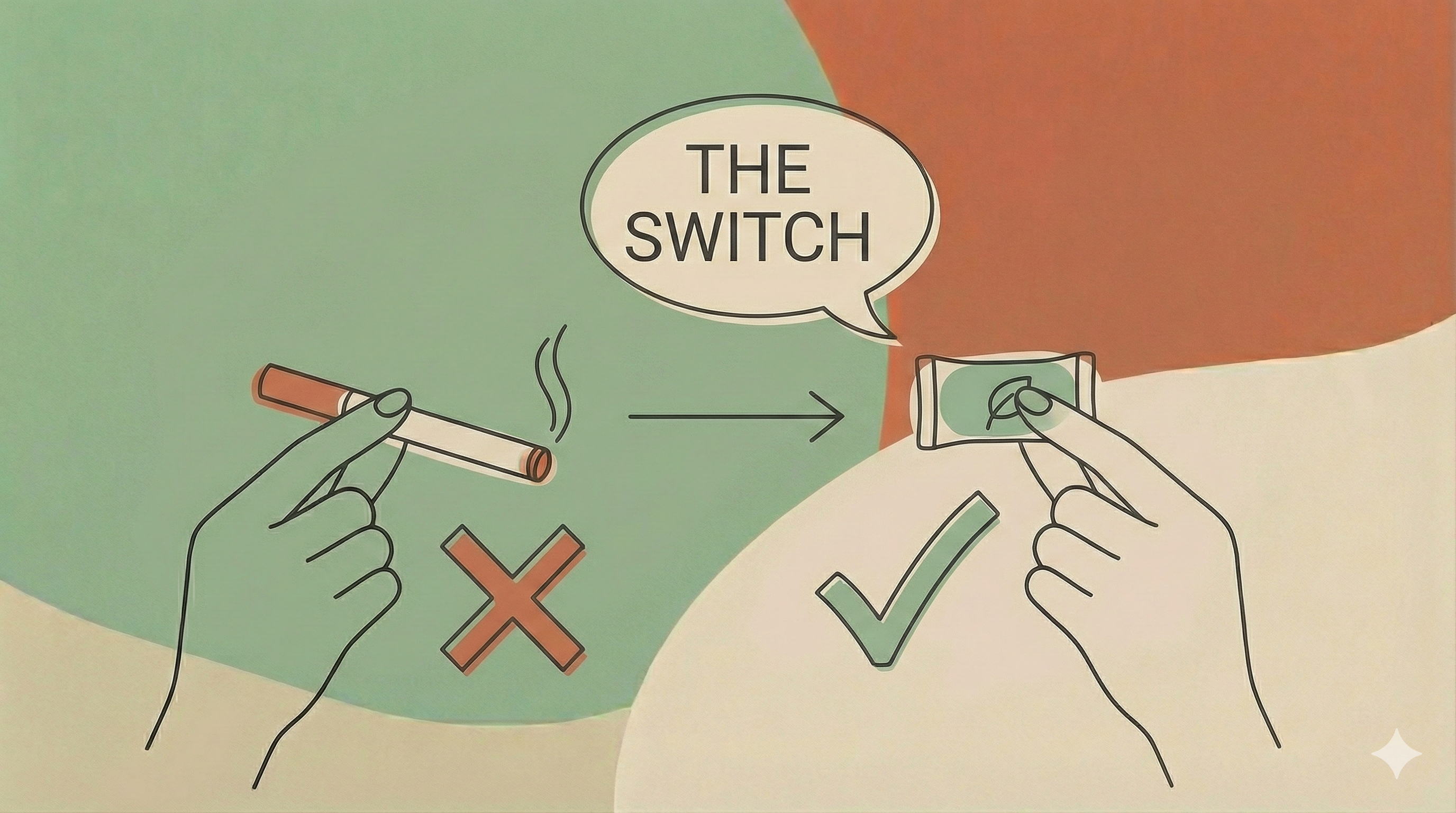
If you are switching from cigarettes to nicotine pouches, the hardest part is not the product. It is the habit system around smoking: the break, the hand-to-mouth ritual, the timing, and the way cigarettes anchor your day.
Nicotine pouches can replace nicotine, but they do not automatically replace the ritual. This guide is designed to help you make the transition with fewer cravings, fewer "I feel sick" moments, and a routine that actually sticks.
Adult-only information. Not medical advice. Nicotine is addictive. If you have health concerns, consult a qualified professional.
What changes when you switch (set expectations early)
Cigarettes deliver nicotine through smoke and a fast ritual. Pouches deliver nicotine through the mouth and the experience is often more gradual.
That means two common surprises:
- "It does not hit instantly." That is normal. Give it time.
- "I miss the break, not the nicotine." Also normal. You will need replacement routines.
If you treat pouches like "a cigarette replacement that must feel the same," you will usually get frustrated. Treat them like a different tool.
Step 1: Decide your goal (this changes your plan)
Be clear with yourself:
Goal A: Replace smoking with a smoke-free routine
You want a product that keeps cravings controlled and helps you stop lighting cigarettes. This is a harm-reduction style goal.
Goal B: Reduce nicotine over time
You want to stabilize first, then slowly step down.
Goal C: Quit nicotine entirely
If this is your goal, consider regulated cessation options and professional support. Pouches may not be the best end-game tool for everyone.
There is no shame in any goal. The key is picking a plan that matches it.
Step 2: Choose a starting strength without overdoing it
Most bad first experiences come from starting too strong.
A practical approach:
- If you were a moderate daily smoker: start around medium strength
- If you were a heavy daily smoker: many still start medium, then adjust after a few days
- If you were a light smoker: start low to medium
Avoid "extra strong" as your first can unless you already know your tolerance. Nausea, dizziness, hiccups, and cold sweat are common when people jump too high.
Quick rule for week one
Your first can should feel:
- satisfying enough to stop you from smoking
- calm enough that you can use it without fear
If you feel sick, you went too high or used it at the wrong time.
Step 3: Choose flavors that make switching easier
When you are switching, choose flavors that reduce friction:
- mild mint or simple citrus are often easiest
- avoid harsh "extra ice" in the first days if you get burning under the lip
- avoid complex candy-like mixes if you tend to feel nauseous
Many people blame "strength" when the real problem is an overly intense flavor profile.
Step 4: Replace smoking triggers in the right order
Do not try to replace every cigarette on day one. That often fails because your brain feels deprived.
Instead, replace your most automatic cigarettes first:
Common "must-have" cigarettes:
- morning cigarette
- after meals
- with coffee
- stress break at work
- commute
A simple 7-day replacement plan
Days 1–2
- Replace 1–2 cigarettes per day (your easiest ones)
- Use a pouch after food
- Keep sessions short (10–20 minutes)
- Keep cigarettes available if needed, but try not to stack
Days 3–4
- Replace your strongest trigger cigarette (often morning or after meals)
- Plan for your work break ritual: walk, water, short reset, then pouch
- Track how many cigarettes you avoided, not how many pouches you used
Days 5–7
- Replace most cigarettes
- Reduce "just in case" smoking
- Stabilize timing: use pouches in predictable moments instead of randomly all day
If you slip and smoke
Do not treat it as failure. Treat it as data:
- Which trigger beat you?
- Were you underfed, dehydrated, stressed, or around smokers?
- Did you run out of pouches or choose a strength too low?
Then adjust.
Step 5: Build a new "break ritual" (this is where people win)
Many smokers miss the ritual more than nicotine. Replace it intentionally:
Try one:
- 3-minute walk
- water and a quick snack
- deep breathing for 60 seconds
- short messaging break
- "hands busy" habit (pen, stress ball)
Then use the pouch. You are teaching your brain: break still exists, just in a new form.
Step 6: Avoid the most common switching mistakes
Mistake 1: Chain use
Taking a pouch immediately after removing one often leads to overuse and nausea.
Fix:
- add a minimum gap (30–60 minutes)
- drink water
- use timing rules (after meals, on breaks)
Mistake 2: Using on an empty stomach
This is a major nausea trigger.
Fix:
- use after food at least in the first week
Mistake 3: Stacking nicotine sources
Pouch + cigarettes + vape can quickly become too much.
Fix:
- choose one main tool for the transition
- if you smoke while switching, treat it as a temporary step, not a permanent mix
Mistake 4: Using late and ruining sleep
Nicotine can affect sleep.
Fix:
- avoid pouches late in the evening
- consider lower strength after dinner
Step 7: Stabilize for 14 days, then optimize
Most people keep changing everything daily. That makes your body and brain never settle.
A better plan:
- Stabilize your routine for 1–2 weeks.
- Only then adjust strength up or down.
Signs you should go lower
- nausea, dizziness, hiccups
- anxiety feeling or jitters
- sleep disruption
- frequent gum irritation
Signs you should go higher (or change approach)
- persistent cravings even with good timing
- you keep smoking because pouches feel too weak
- you need constant back-to-back pouches to cope
In that case, it is often better to go slightly higher strength rather than increase frequency all day.
Frequently Asked Questions
Will pouches stop cravings as well as cigarettes?
They can, but it may feel different and more gradual. Routine and timing matter a lot.
How many pouches per day should I expect while switching?
It varies. Focus on replacing cigarettes first, then refine pouch frequency once smoking drops.
Should I start on the strongest pouch because I was a heavy smoker?
Not necessarily. Many heavy smokers still feel sick on extra strong at first. Start medium, test after meals, then adjust.
What if I want to quit nicotine completely?
Consider professional support and regulated cessation options. You can also stabilize first, then step down slowly over time.
Adult-only information. This is not medical advice. If you feel unwell or have health concerns, consult a qualified professional.