Nicotine Pouches vs Gum vs Patches: How to Choose
Three different delivery styles for nicotine. The best choice depends on your goal and your craving pattern, not what's 'strongest.'
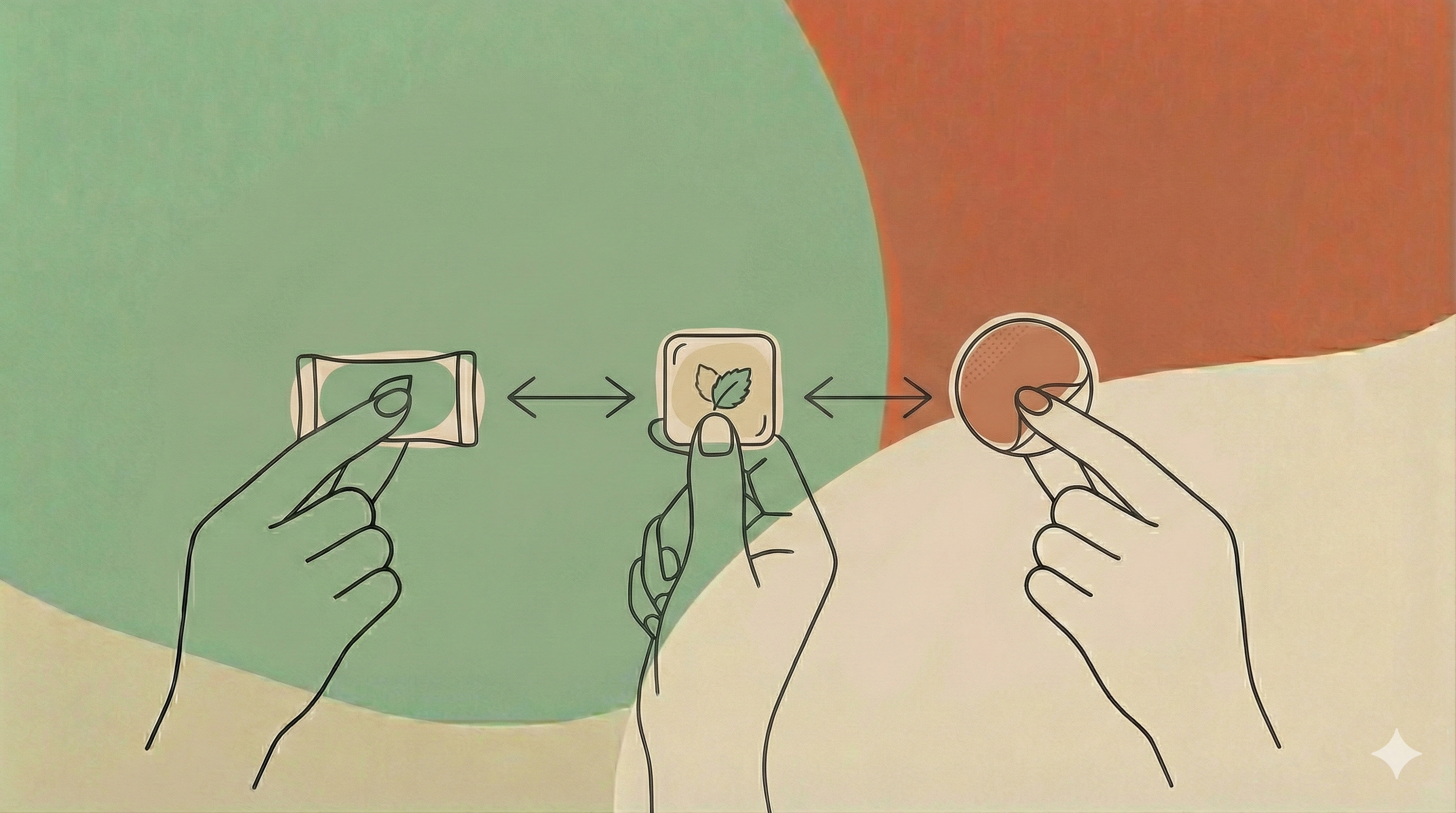
If you are comparing nicotine pouches, nicotine gum, and nicotine patches, you are really comparing three different "delivery styles":
- Pouches: on-demand sessions, discreet, consumer nicotine product in many markets
- Gum: on-demand and adjustable, often used as nicotine replacement therapy (NRT)
- Patches: steady background delivery, often used as NRT
The best choice depends on your goal and your craving pattern, not what someone online says is "strongest."
Adult-only information. Not medical advice. Nicotine is addictive. For cessation planning or combining products, consult a qualified professional.
Step 1: Decide your real goal
Goal A: Stop smoking, keep nicotine stable for now
You need something that prevents relapse and handles triggers.
Goal B: Reduce nicotine gradually
You need something structured and predictable.
Goal C: Quit nicotine completely
NRT tools like gum and patches are often used in step-down plans. Professional support can improve success.
Be honest here. If you want to quit cigarettes first, do that. You can reduce nicotine later.
Step 2: Match the tool to your craving pattern
Cravings come in two styles:
1) Constant background craving
You feel "off" all day without nicotine.
Often helped by:
- patches (steady delivery)
- structured pouch use
2) Sudden spikes (waves)
You are fine, then a trigger hits: coffee, stress, after meals.
Often helped by:
- gum (quick and adjustable)
- pouches (on-demand sessions)
Many people have both. If you do, a common strategy in cessation programs is steady baseline plus an on-demand tool. But do not combine products casually without guidance.
Daily-life comparison (what it feels like)
Nicotine pouches
Best when you want:
- discretion
- simple routine
- clear "session" structure
- no chewing
Potential downsides:
- mouth irritation if you use one spot
- nausea if strength is too high or you use on empty stomach
- easy to overuse if you chain sessions
Nicotine gum
Best when you want:
- control over timing
- something to do with your mouth
- adjustable use for trigger moments
Potential downsides:
- jaw fatigue if you chew constantly
- taste can be harsh for some
- improper use can cause stomach discomfort
Nicotine patches
Best when you want:
- minimal decision-making
- all-day background stability
- fewer "spikes"
Potential downsides:
- may not satisfy sudden trigger cravings by itself
- skin irritation for some
- less "ritual replacement" for oral habits
Which one fits your routine?
Choose pouches if:
- you need discretion at work
- you want a session-based rhythm
- you dislike chewing
- your main problem is smoking breaks and triggers
Choose gum if:
- your cravings are spike-based
- you want an adjustable tool for triggers
- you want an oral habit replacement
Choose patches if:
- your cravings feel constant
- you want the least daily effort
- you want to reduce "decision fatigue"
A practical selection framework (3 questions)
1) Do I need steady baseline support?
If yes, consider patches or a structured pouch schedule.
2) Do I need something for spike cravings?
If yes, gum or pouches can help.
3) Do I overuse when access is too easy?
If yes, patches can reduce constant reaching, and pouches can help if you treat them as timed sessions. Vaping often makes this worse.
If your goal is quitting: what "structure" looks like
A common reason people fail is chaos. Tools work best with structure:
- Set time windows (morning, after meals, mid-afternoon)
- Avoid late-night nicotine if sleep suffers
- Track your usage for one week
- Make one change at a time (reduce strength or frequency, not both)
If you do not track, you will underestimate usage.
Safety and combination note
Some people combine products. That can increase total nicotine and side effects.
If you are considering combining patches with gum or pouches:
- do not guess dosages
- consult a pharmacist or clinician
- monitor for nausea, dizziness, jitters, sleep disruption
If you feel unwell, reduce nicotine and seek help.
Frequently Asked Questions
Which is best for quitting smoking?
Many people use NRT (patches and gum) in structured quit plans. Pouches can also help some people stop smoking, but goals and regulation vary by region. What matters most is consistency and support.
What if gum upsets my stomach?
It can when used incorrectly or too frequently. Consider professional guidance, slower use, or switching tools.
What if pouches irritate my gums?
Rotate placement, shorten sessions, choose calmer flavors, and avoid extra strong early on.
Can patches stop cravings by themselves?
They often help baseline cravings, but some people still need a trigger tool or behavioral strategy.
Adult-only information. Not medical advice. Stop use and seek professional advice if you experience concerning symptoms.