Best Nicotine Pouches for Former Smokers: How to Choose (Without Guessing)
The best pouch is the one that keeps you stable enough that you don't relapse, while still feeling comfortable day-to-day. Here's how to choose.
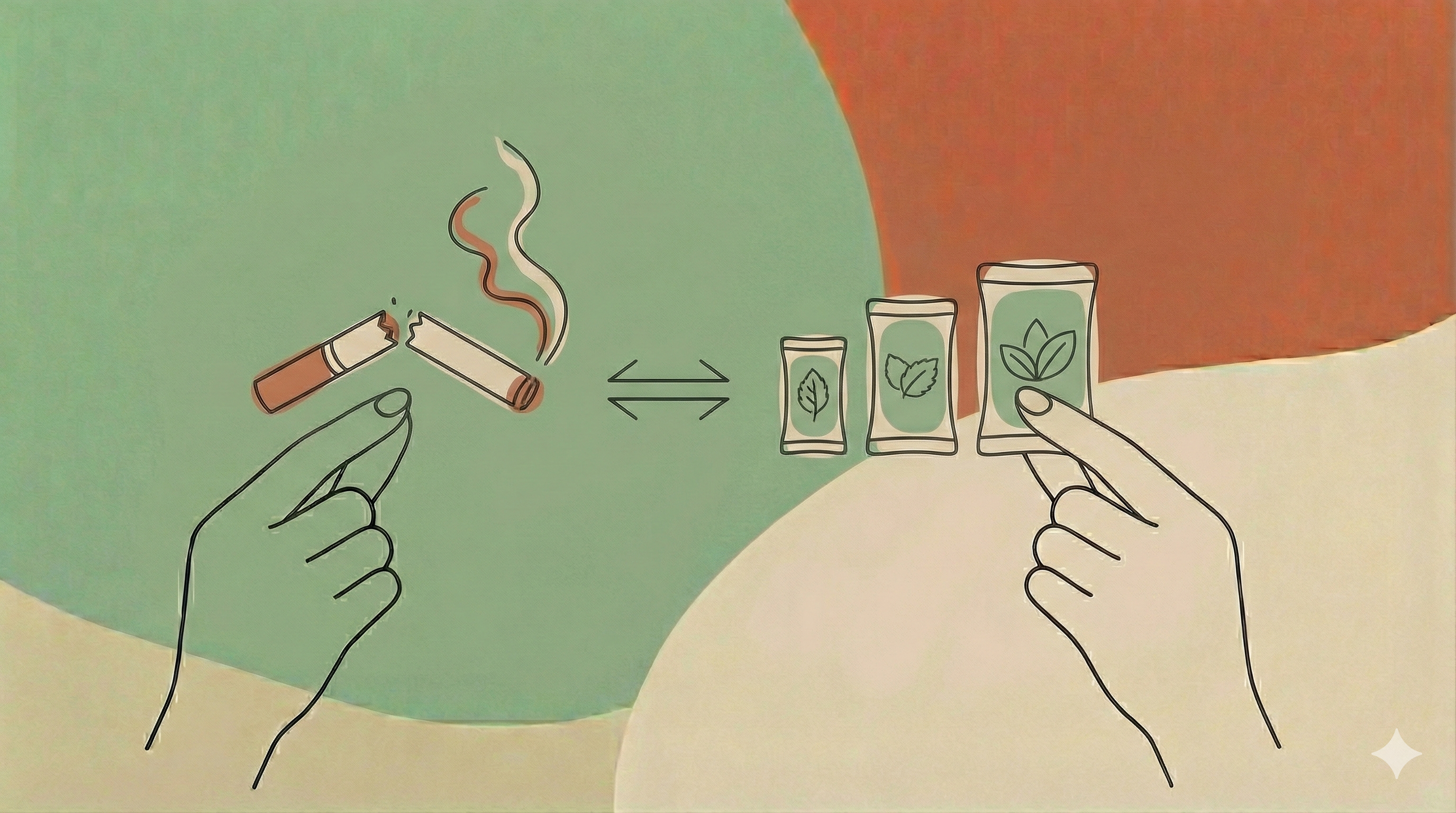
If you are a former smoker, the "best" nicotine pouch is not the strongest one or the trendiest flavor. The best pouch is the one that keeps you stable enough that you do not relapse, while still feeling comfortable day-to-day.
Most former smokers quit and then struggle in one of two ways:
- cravings spike and they want something stronger immediately
- they choose something too strong, feel sick, and give up
This guide helps you choose strength, format, flavor, and usage style so you stay in control.
Adult-only information. Not medical advice. Nicotine is addictive.
Step 1: Start with the job the pouch must do
A pouch has to solve a specific problem:
- prevent relapse during triggers (coffee, stress, social situations)
- cover morning and after-meal cravings
- fit your work routine discreetly
- not wreck sleep
If it does those, it is "good," even if the flavor is boring.
Step 2: Choose strength based on stability, not bravado
Former smokers often overestimate the strength they need. A smoother transition usually comes from "enough" nicotine consistently, not a huge hit.
A practical approach:
- If you recently quit and cravings are strong: start in the medium range
- If you feel nausea easily: start lower, increase only if needed
- If you keep failing because cravings break you: it may be smarter to go slightly higher rather than chain low strength all day
Avoid starting on extra strong unless you already know it feels fine for you. Extra strong often creates nausea, jitters, and sleep problems, which makes relapse more likely.
Step 3: Pick a pouch format that feels comfortable
Comfort matters because irritation becomes a reason to quit the tool.
Common formats:
- Slim: usually more discreet and comfortable for many
- Regular: can feel bulkier but may have longer presence
If you get gum soreness, try slim and rotate placement.
Step 4: Choose "clean" flavors first
For former smokers, the goal is reliability. Start with flavors that do not create harshness:
- mild mint
- simple citrus
- clean berry
Be careful with:
- extra ice menthol (can feel aggressive)
- very sweet candy mixes (can feel nauseating)
- experimental flavors (hit-or-miss)
Once you are stable for 1–2 weeks, then you can explore fun flavors.
Step 5: Understand release style (why some pouches feel "too fast")
Two pouches with similar mg can feel very different because of release speed. Some feel like a fast punch, others a smoother curve.
If you are relapse-prone because cravings hit suddenly, a faster release might feel helpful. If you are sensitive and get nausea, a slower, smoother feel is usually better.
The best way to learn is not by guessing online. It is by testing:
- after meals
- with short sessions (10–20 minutes)
- with at least 30–60 minutes between sessions
Step 6: Build a former-smoker routine that actually prevents relapse
Here is a routine framework that works for many people:
Morning
Morning is often the hardest. Use after food if possible, and treat it as a planned session.
After meals
This is a major cigarette trigger. Plan a pouch session after meals in week one.
Work stress moments
Replace the smoke break ritual:
- short walk
- water
- then pouch
Evening
If sleep is sensitive, reduce strength or stop earlier. Sleep disruption is a common relapse driver.
Step 7: Avoid these former-smoker traps
Trap 1: Chasing the "cigarette hit"
Pouches can feel different. Do not overcorrect by going extra strong immediately.
Trap 2: Using all day without structure
That creates dependence patterns and side effects. Use rules and windows.
Trap 3: Social triggers
Bars, friends who smoke, long conversations outside. Plan for these:
- carry extra pouches
- choose calmer flavors
- set a maximum for the event so you do not overdo nicotine
Trap 4: "I had one cigarette, so I failed"
A lapse is not a relapse. Identify the trigger and adjust. The goal is trend direction.
How to tell you picked the right pouch
You chose well if:
- cravings are manageable between sessions
- you are not nauseous or dizzy
- you can work and focus without constant reaching
- your sleep is not worse
- your mouth feels okay
If cravings are controlled but you feel sick, lower strength or shorten sessions. If you feel fine but cravings are breaking you, consider adjusting strength up moderately.
Frequently Asked Questions
Should former smokers use higher strength?
Not automatically. Many do best on medium strength with good timing. Higher is not always better.
What if I miss the hand-to-mouth ritual?
Build a new break ritual: walk, water, breathing reset. Pouches cover nicotine, but you still need a ritual replacement.
How fast should I step down in nicotine?
Only after you are stable. Stabilize 1–2 weeks, then reduce slowly, one change at a time.
When should I ask for professional help?
If you relapse repeatedly, feel severe side effects, or your goal is to quit nicotine completely, professional guidance can help.
Adult-only information. This is not medical advice. If you feel unwell or have health concerns, consult a qualified professional.